Program Overview
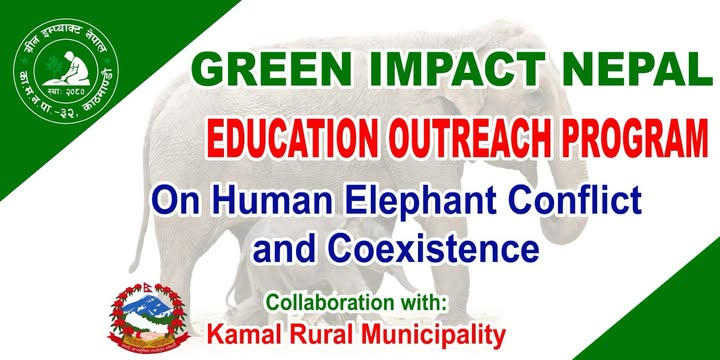
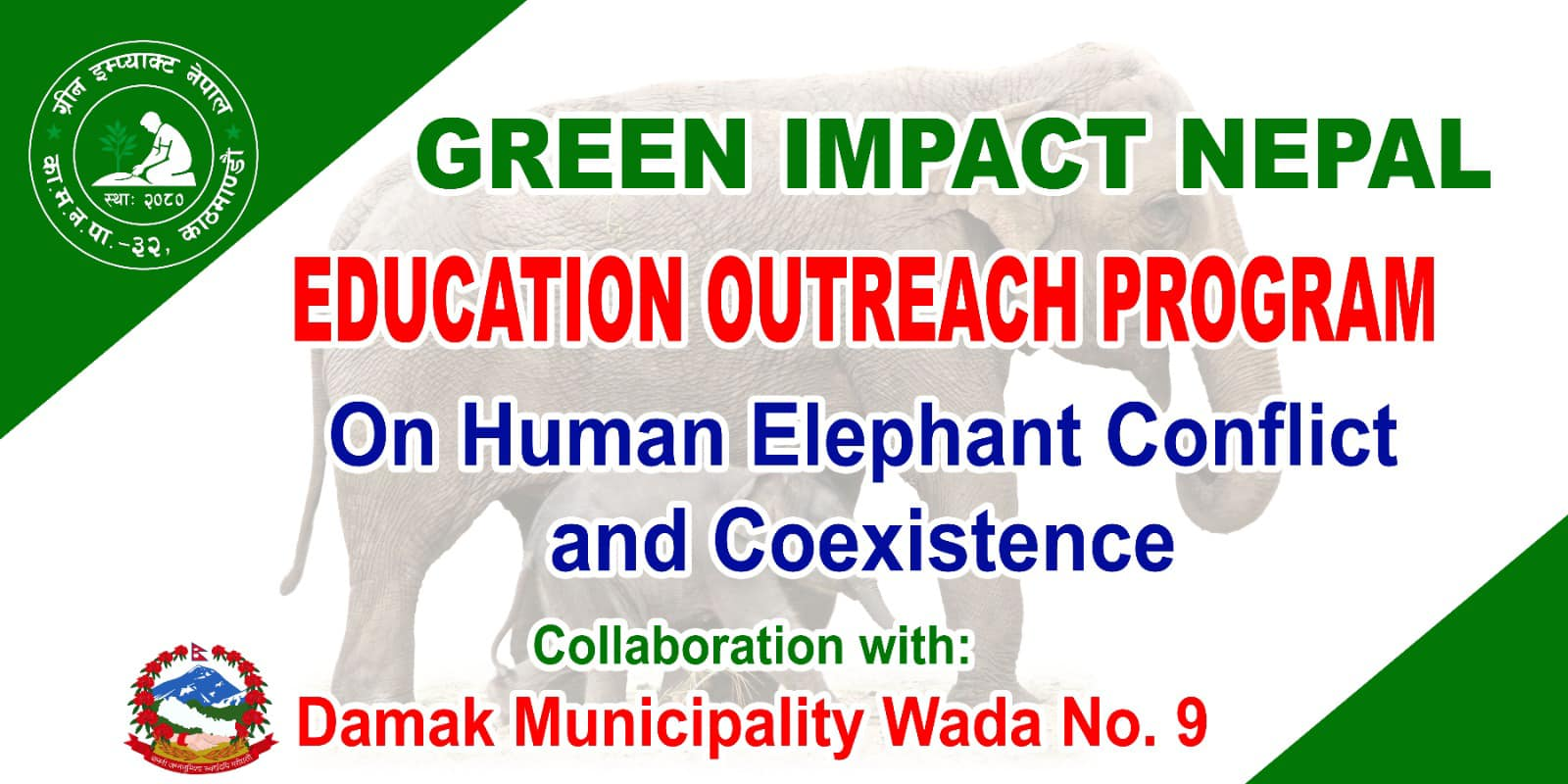
Green Impact Nepal (GIN), in collaboration with Damak Municipality and Kamal Rural Municipality, is implementing an Education Outreach Program to raise awareness about Human-Elephant Conflict (HEC) and promote coexistence with wildlife.
These regions are among the most affected by HEC, where human settlements and elephant habitats frequently overlap, leading to conflicts that pose risks to both human communities and wildlife. Understanding the causes and impacts of these conflicts is crucial in developing effective strategies for peaceful coexistence.
Educational Approach
Through interactive sessions with students and teachers, our team is educating communities on the root causes of HEC, its consequences on both humans and elephants, and practical mitigation measures. We emphasize sustainable solutions such as early warning systems, habitat conservation, and community-driven initiatives to ensure safety while protecting biodiversity.
By fostering awareness and equipping local communities with knowledge, we aim to reduce conflicts and build a harmonious relationship between humans and wildlife. We extend our gratitude to Damak Municipality, Kamal Rural Municipality, and all participants for their active engagement in this initiative.
Key Program Components
Educational Sessions
- Interactive workshops for students
- Teacher training programs
- Community awareness campaigns
Solutions Focus
- Early warning systems
- Habitat conservation strategies
- Community-driven initiatives
Partnership Impact
This collaborative effort with Damak Municipality and Kamal Rural Municipality demonstrates the power of partnerships in addressing environmental challenges. By working together with local governments and communities, we can create lasting solutions that benefit both people and wildlife, ensuring a sustainable future for the region.